Off-market real estate in France and Switzerland runs on discretion, not public listings, because visibility itself is a risk for family offices and UHNWIs, especially from the Gulf. Demand from Middle Eastern capital is rising sharply, targeting Geneva, Paris, and the Alps for stability and diversification. Supply is structurally scarce, since exceptional properties rarely trade and move through private networks built on long-term trust rather than speed. The advisor's role goes beyond introductions, coordinating notaries and tax experts across borders. Key risks include a slow tempo, complex cross-border structuring, and the need to verify an intermediary's genuine network access.
Most significant transactions are never publicly advertised. In the off-market real estate sector in France and Switzerland, discretion is not merely an added service for the most discerning clients; it is a prerequisite for any serious negotiation. There are no listings and no unnecessary intermediaries—only qualified access to assets that will never reach the public market.
For family offices, institutional investors, and ultra-high-net-worth individuals—particularly those from the Gulf region who are increasingly allocating capital to Europe—this reality transforms the approach to acquiring exceptional properties. Understanding the mechanics of this parallel market is the essential first step before making any significant investment in France, Switzerland, or the Alps.
The mainstream residential market relies on visibility: listing portals, multiple agency mandates, and organized viewings.
This model does not align with the expectations of international private wealth clients, for whom the public exposure of an asset, its value, location, and the circumstances of its sale, represents an inherent risk.
Several structural dynamics reinforce this trend:
Private capital flows from the Middle East into France and Switzerland have intensified in recent years, driven by a desire for legal stability, quality of life,
and diversification away from the dollar zone. Geneva, Paris, and the French Alps rank among the preferred destinations for this type of wealth allocation.
Truly exceptional properties—such as historic estates, Alpine chalets, Parisian private mansions, and five-star hotels—rarely change hands.
When they do, owners favor controlled sales without public advertising, often relying on pre-existing private networks.
For a royal family, a sovereign wealth fund manager, or a prominent entrepreneur, publicizing a transaction reveals far more than just a price; it exposes wealth management strategies, locations, and sometimes even personal security details. This requirement fundamentally shapes the workings
of the off-market sector.
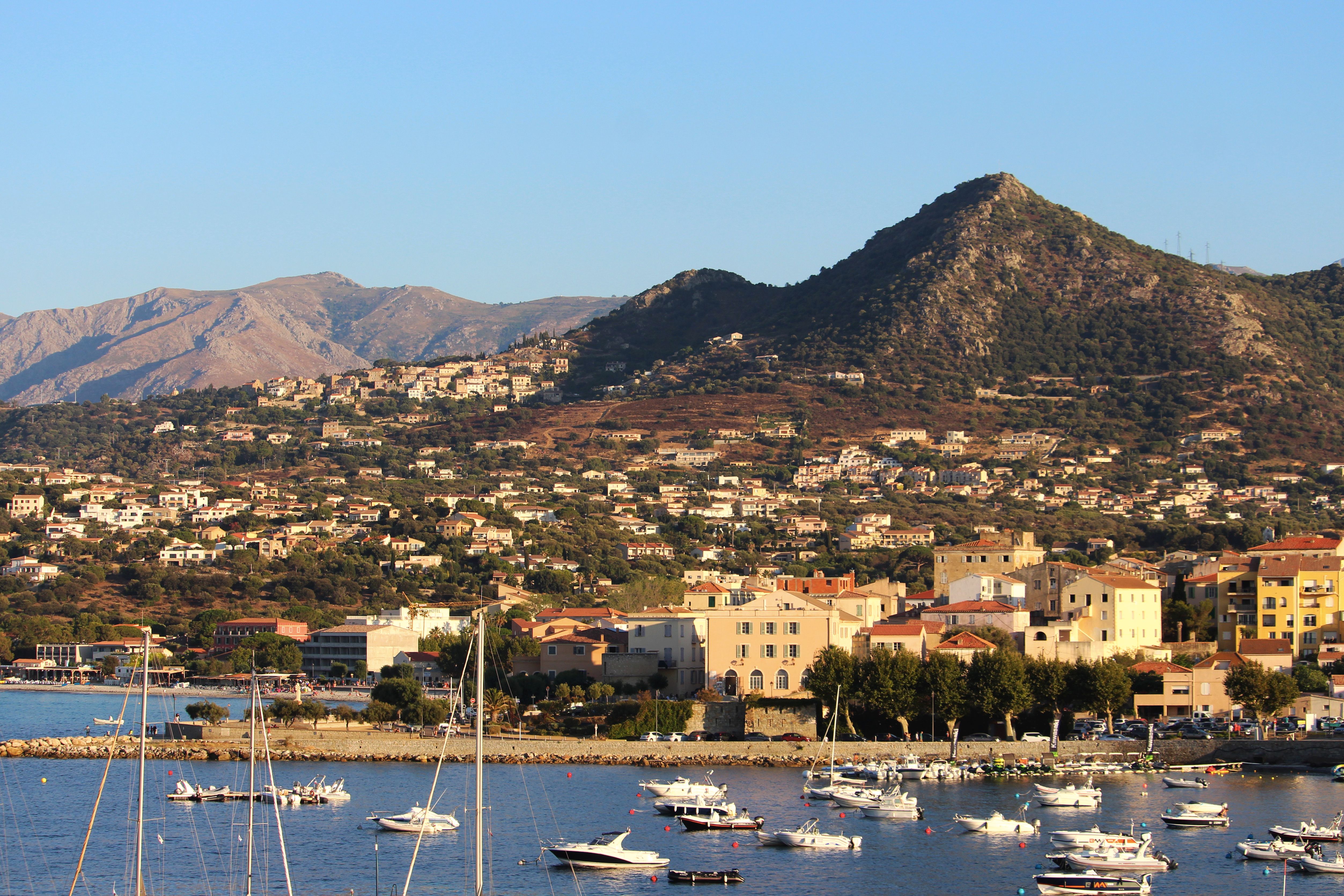
The most significant acquisitions are defined not by the publicity they generate, but by their discretion. For instance, real estate transactions handled
by Luminous Global Investments attract no public attention—and that is precisely what ensures their smooth execution.
In this sector, the process is just as important as the outcome. Trust is established long before a price is even discussed: often through informal conversations spanning months or even years before a formal offer is made. One client, who has since become a friend, fell instantly in love with a property during the first viewing, yet he took several months to reflect before submitting a firm offer. From our very first meeting, his word was his bond; it was this quality
of relationship—far more than the speed of execution—that allowed the transaction to conclude smoothly for all parties involved.
Yet, this unhurried pace is the norm in the ultra-prime market: serious capital moves methodically, never hastily. It is this discipline, combined with genuine access to the right network and the patience to wait for the perfect asset—that distinguishes a successful acquisition from a mere real estate transaction.
In this environment, the advisor’s role goes beyond simply making introductions. It encompasses coordination with notaries, tax advisors,
and all stakeholders involved in cross-border transactions. High-quality guidance is measured by the ability to anticipate every stage of the process,
from the initial property selection through to the final signing and post-acquisition logistics.
The Franco-Swiss off-market market offers a range of asset typologies, each responding to a distinct investment logic.
Luxury residences, building land with permits cleared of all appeals, and properties bordering Lake Geneva constitute the heart of a Geneva market structurally constrained by the scarcity of land and a strict regulatory framework.
The private mansions and large family apartments in the 7th, 8th or 16th arrondissements remain a safe haven for an international clientele looking
for a European pied-à-terre with strong heritage and symbolic value.
Contemporary or historic coastal villas, exceptional chalets in Courchevel or Megève: these markets benefit from sustained demand, both for personal use and for a logic of diversification and long-term valorization.
Beyond residential, certain institutional investors and family offices direct part of their allocation towards five-star hotel establishments or mixed-use assets, with a view to yield and preserve capital over several generations.
Rigorous support also involves exposing the areas of vigilance specific to this market.
Scarcity slows transactional tempo. An investor in a hurry takes the risk of being presented with second-rate assets, or of trading in a weak position.
Cross-border structuring requires in-depth expertise. Taxation, family law, bilateral conventions: in Switzerland, regulations and taxation are different from one canton to another; in France, taxation is uniform but regulations can vary (additional constraints on the coast, in protected areas, etc.).
Failing coordination between boards can compromise an otherwise strong operation.
Access to the network cannot be decreed. Many intermediaries take advantage of “off-market” access without really having the necessary relationships. Verifying the legitimacy and history of an advisor remains an essential step before any engagement.
Discretion has an organizational cost. It requires longer processes, in-depth due diligence and a restricted circle of trust — all elements that must be anticipated in the investment schedule.
Off-market real estate in France and Switzerland does not respond to any of the logic of the classic residential market. It is a universe structured by confidentiality, relationships of trust and long-term commitment - parameters which, far from constituting a constraint, guarantee the quality and security
of the assets ultimately acquired.
For investors from the Middle East who are now directing a growing part of their assets towards Europe, this understanding of the market constitutes
a decisive competitive advantage. It allows you to approach each opportunity with the method, patience and network that this level of transaction requires and thus access assets that will never be offered anywhere other than within a restricted circle.
.png)